The Ultimate Guide to Scuba Diving: Everything You Need to Know Before Your First Dive
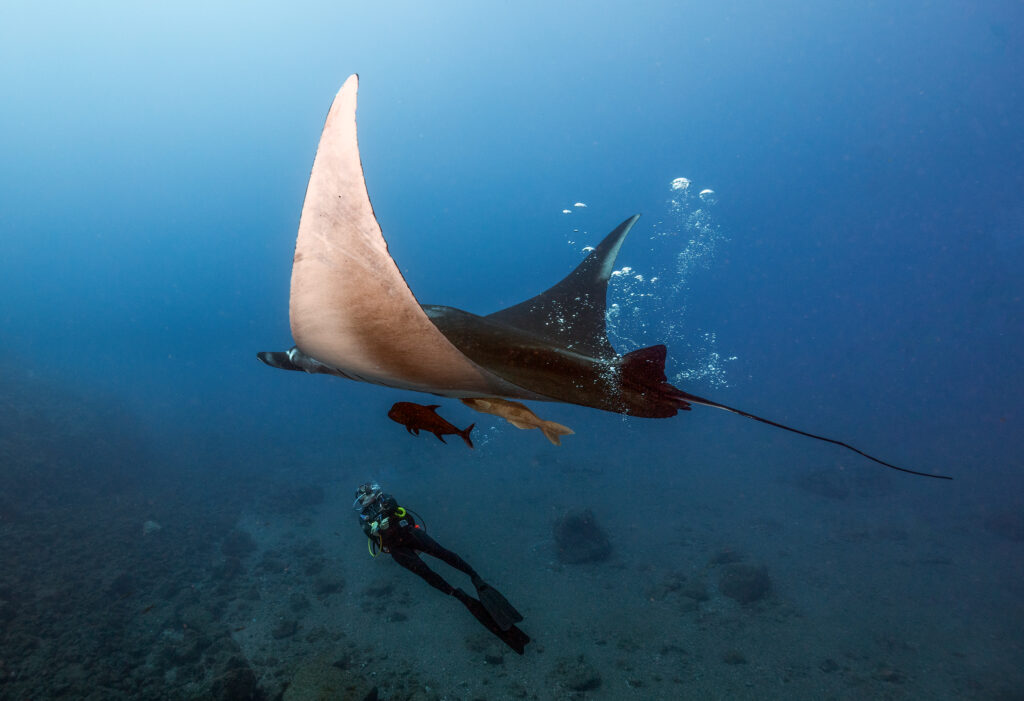
Most people see the ocean from the shore; explorers see it from within. This guide isn’t just about technical steps; it’s about the mindset shift required to enter a world where you are a guest of the pelagic wildlife.
1. The Prerequisites: Are You Ready To Dive?
Before getting into the gear, check the basic requirements to become a diver.
- Health and Fitness: You don’t need to be an athlete, but being comfortable in the water is essential.
- Age Limits: You can start diving at 10 years old.
- Mental Readiness: Most of the work, especially when you start to learn how to dive is to relax, breathe calmly and focus on the instructions.
2. Choosing Your Path: Discovery vs. Certification
You can then choose between two options:
- Discovery Scuba Diving (DSD): A one-day try Scuba Diving session in shallow water (maximum 12m/40 feet) with an instructor. Perfect to check if you like it or not.
- Open Water Certification: The full license. It involves online theory, pool sessions, and four open-water dives with an instructor for a duration of 2.5 to 3 days.
3. The Scuba Gear: Your Life Support System
- The Mask: Your window to the blue. A good seal and no fogging mask is very important for you to see the best marine life.
- The Fins : They are used to swim and move underwater at normal speed.
- The Regulator: Your engineering system that makes you breathe underwater and make bubbles.
- The BCD (Buoyancy Control Device): Your floating device that helps to control your position underwater.
- The Wetsuit: If necessary, you will wear a wetsuit to help you float and protect from water temperature.
4. What to Expect on Your First Descent?
Either you choose a DSD or the Open Water Certification, your instructor will explain you how to :
- Breathe Underwater
- Equalize: There are different techniques to “pop” your ears early and be comfortable.
- Be Neutrally Buoyant: That incredible moment when you start to glide and feel like a fish.
- Communicate: An overview of essential hand signals (OK, Up, Down, Air consumption).
5. Being an Ethical Explorer
Now that you start diving, you should never forget how to interact with marine life
- Passive Interaction: Observe, don’t touch and maintain a respectful distance with animals.
- Buoyancy as Conservation: Good trim isn’t just for comfort; it’s to ensure you don’t accidentally damage the reef or disturb the silt.
- Don’t leave trash in the Ocean: Take everything back with you and try using reef friendly sunscreen.
6. Where to Do It ?
- Look for Experts: Choose a shop like Hammerhead Divers that prioritizes small groups and safe trips over crowded and mixed-levels boats.
- The Best Location: Baja has a rich biodiversity—where you might see a large variety of marine life such as : reef fish, sea lions, rays, turtles, sharks, moray eels, lobsters and more—and provides the most rewarding first experiences of Scuba Diving.
The Ocean Awaits Explorer !