Discover the Rays of the Sea of Cortez
The Sea of Cortez, also known as the Gulf of California, is a biological treasure trove, famously dubbed the “world’s aquarium” by Jacques Cousteau. Beneath its sparkling surface lies a vibrant ecosystem teeming with life, and among its most captivating inhabitants are the graceful and enigmatic rays.
1. The Phenomenal Mobula Rays
These incredible creatures, often called “devil rays” due to the horn-like cephalic fins near their mouths, are famous for their spectacular acrobatic displays. Several species of Mobula rays can be found in the Sea of Cortez, including the Munk’s Pygmy (Mobula munkiana), which forms massive seasonal aggregations in spring and early summer (April to July). Often called “fevers”, mobula rays hang in groups of hundreds, sometimes thousands of individuals, launching themselves high into the air, creating a mesmerizing ballet of synchronized splashes.
2. The Cownose Rays
These rays have been named due to their distinctive diamond-shaped body and deeply notched snout that resembles a cow’s nose. The Cownose rays (Rhinoptera bonasus) are highly migratory species. They are often seen swimming in large schools of hundreds of individuals around the months of November and December in Los Cabos.
3. The Giant Manta Rays
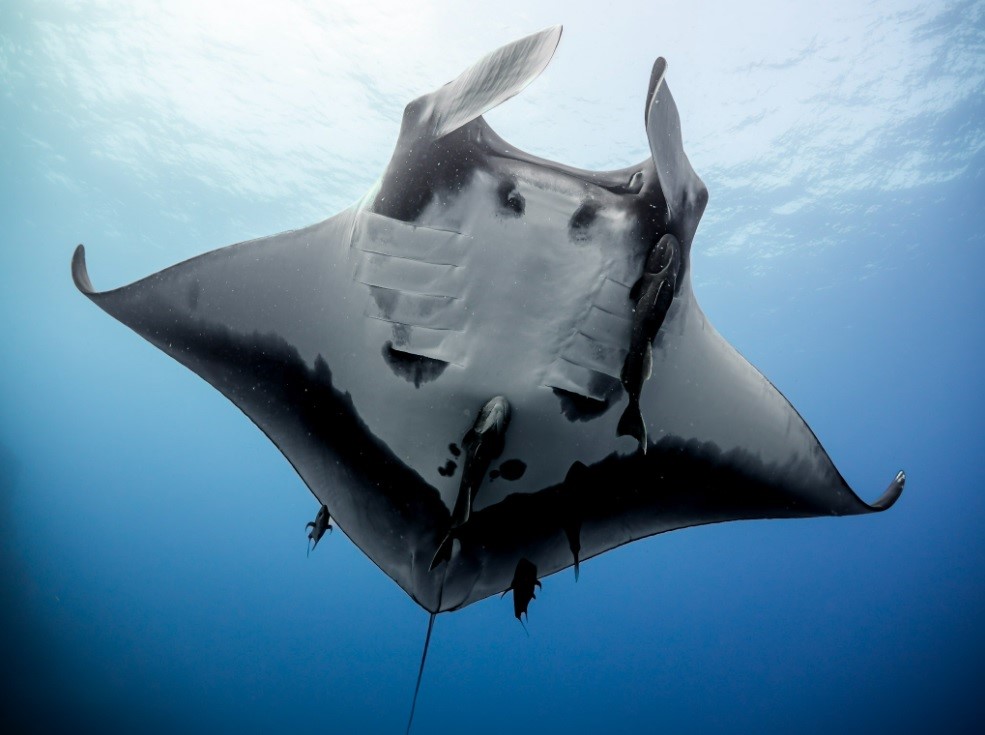
Another majestic encounter is with the Giant Manta Ray (Mobula birostris). These are the largest rays in the world, with impressive wingspans that can exceed 7m/20 feet! Unlike their stingray cousins, mantas are filter feeders, gracefully gliding through the water with their wide mouths open, sifting plankton from the currents. The best place to encounter a giant manta underwater is in La Reina between July to September.
4. The Bottom Dwellers: Stingrays and Their Kin
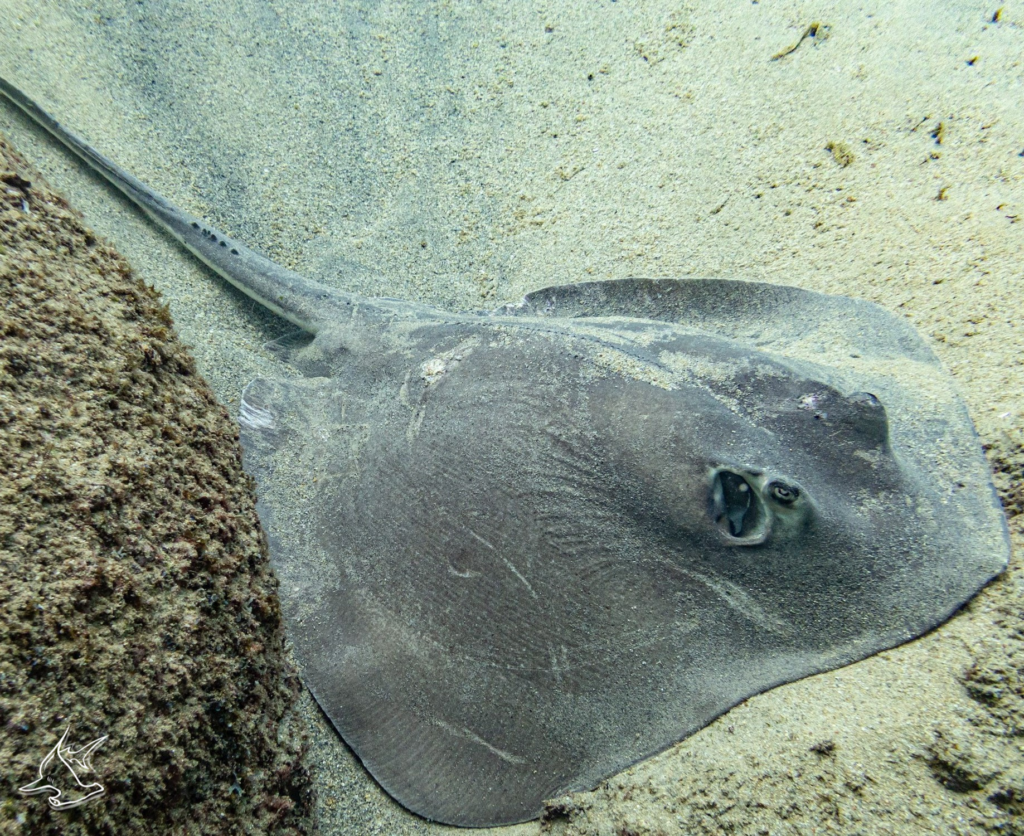
While Mobulas and Mantas steal the aerial and oceanic spotlight, many other fascinating rays call the Sea of Cortez home, often found closer to the seafloor, sandy bottoms and rocky reefs. They can be seen year-round with peaks in June/July during the reproduction season.
- The Cortez Round Stingray (Urobatis maculatus) is particularly special as it’s endemic to Mexico, thriving along the Baja California coast and throughout the Gulf.
- The Round Stingray (Urobatis halleri)
- The Bullseye Stingray (Urobatis concentricus)
- The Diamond Ray (Dasyatis brevis) is the biggest of them. Full grey in colour, they are often found in Blow Hole (Cabo Corridor) or El Bajo (Cabo Pulmo).
5. Spotted Eagle Rays
Easily recognizable by their beautiful white spots against a dark background, the Spotted Eagle Rays (Aetobatus narinari) are active swimmers, often seen gliding gracefully over reefs with their distinctive, pointed snouts. The best chance to encounter them is at Whale’s head (Cabo Corridor).
6. Bat Rays
With their broad, wing-like pectoral fins and blunt, rounded snouts, Bat Rays (Myliobatis californica) are another common sight, often seen foraging along the seafloor of the Sea of Cortez.
7. Electric Rays
The Sea of Cortez also hosts two species of Electric Rays : the Bullseye Electric Ray and the Giant Electric Ray. These fascinating creatures possess specialized organs capable of generating an electric discharge, used both for defense and to stun prey.
The Ocean Awaits Explorer !