- Hammerhead sharks in Gordo Banks
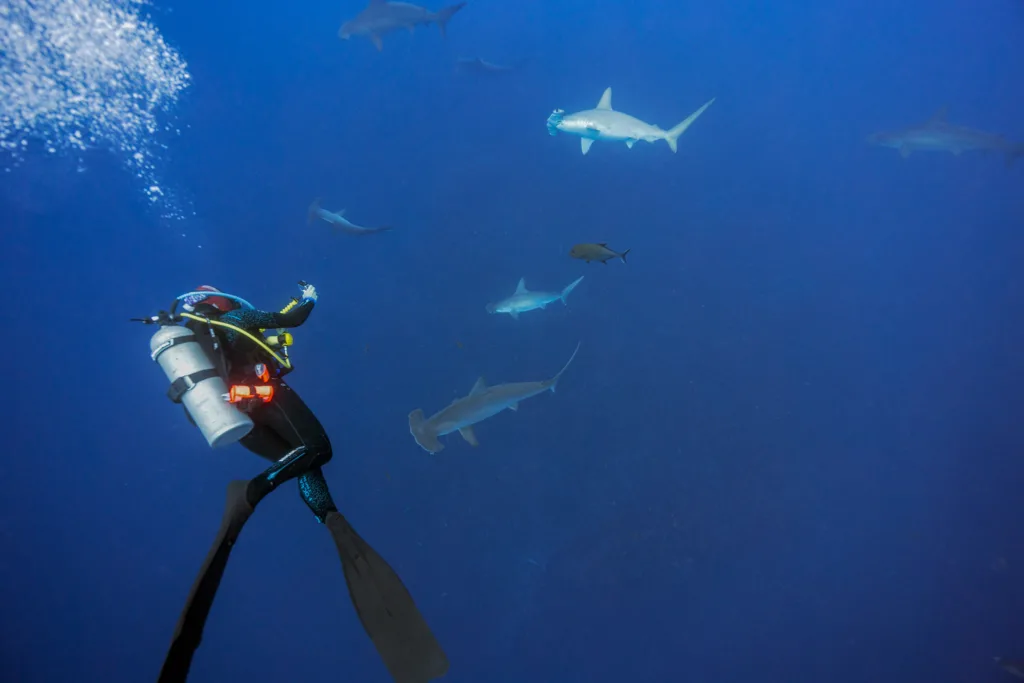
Automn is a transition period that brings a mix of summer and winter species. Visibility is often excellent and water still warm (73F/23C to 88F/31C) brings the best time to encounter the schooling Hammerhead sharks. In the deep, nutrient-rich waters of the offshore Gordo Banks, these majestic and often mystical sharks follow the currents, coming close enough to the divers to witness their incredible formations. If seeing dozens of these iconic creatures gliding silently overhead is on your bucket list, October is prime time.
- Marlins and Tunas
Forget the restaurant menu—this is where you see the ocean’s fastest predators ALIVE. The Sea of Cortez is the kingdom of pelagic species, and while they attract major fishing tournaments, Gordo Banks is one of the rare sites where divers can encounter them in their element. Keep your eyes open into the blue, these seamounts are a home for massive individuals: Blue, Striped, or Black Marlins will often pass silently by a group of divers, or colossal Tunas will flash across your view. A true moment that reminds you who the real royalty of the ocean is.
- Yellow Butterfly migration
The wonder of Los Cabos isn’t confined to the water. After the summer rainy season (July-September), the local desert flora flourishes, creating the perfect habitat for migratory species. One of the most spectacular is the Yellow Butterfly migration. Thousands of these vibrant butterflies dance in the air across the cities and—most magically—offshore where the desert sky meets the water. This phenomenon typically peaks from mid-September to mid-October and is a visual spectacle. More than just a beautiful sight, it serves as a powerful reminder of the region’s incredible biodiversity. Cabo’s ecosystem is a true sanctuary and an essential migratory homeland for species both above and below the surface.
- Baby sea lions in La Paz, La Ventana and more
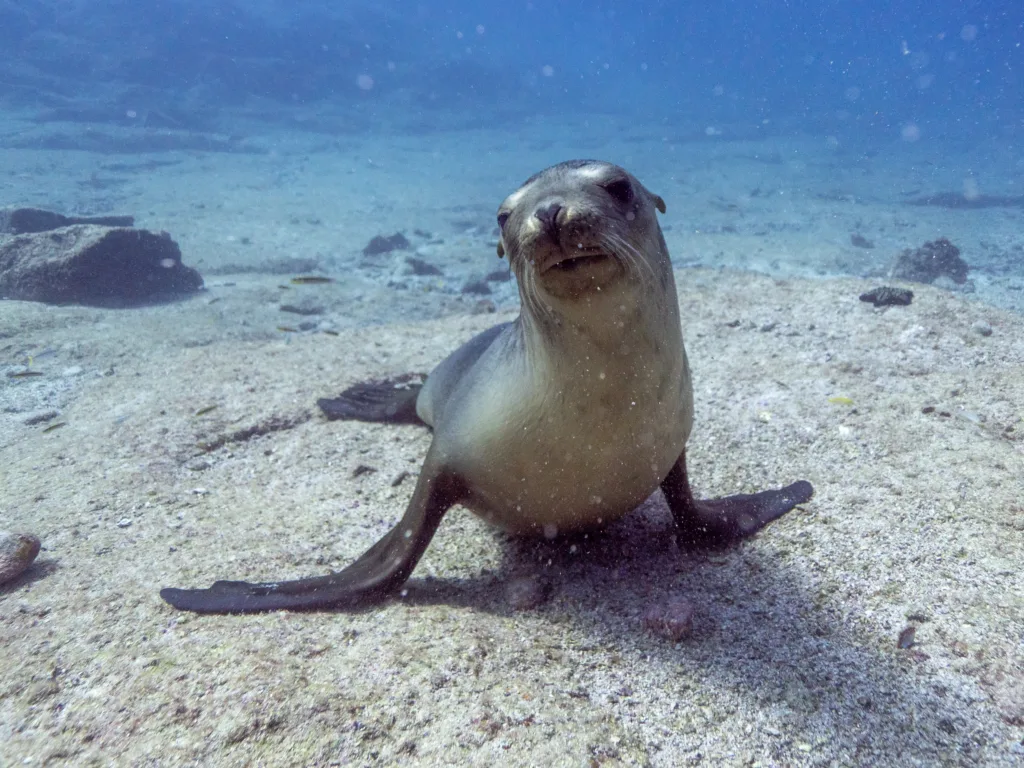
The largest sea lion colonies in the Sea of Cortez give birth during the summer months. By October, those pups are in the prime of their childhood—curious, playful, and completely fearless. Head to the colonies near La Paz or La Ventana and you’ll find these young pups at their most energetic : dancing in front of cameras, opening their mouths, playing with divers fins and maybe more pieces of the scuba equipment. A wonderful interaction for any level divers, even beginners.